
As the 20th century drew to a close, Hollywood began to pivot away from the high-octane action and bright-colored fantasies of the 90s toward a deeper, darker, and more introspective exploration of the human psyche. Released in 1999, Girl, Interrupted arrived as a cultural lightning rod. It wasn’t just another medical drama; it was a visceral, raw, and often uncomfortable examination of mental health, gender, and the societal constructs of the 1960s. At the heart of this storm stood Winona Ryder. While the film is often remembered for its explosive supporting performances, it was Ryder’s “Quiet Architecture” that gave the story its foundation, its heart, and its lasting legacy.
1999: The Century’s End and the Birth of a New Introspection
The release of Girl, Interrupted marked a narrative shift in mainstream cinema. The turn of the millennium was characterized by a growing collective awareness of mental health, trauma, and the complex inner lives of young people. Based on Susanna Kaysen’s haunting memoir, the film provided a mirror into the 1960s—a time when the line between a “rebellious girl” and an “unstable patient” was dangerously thin.
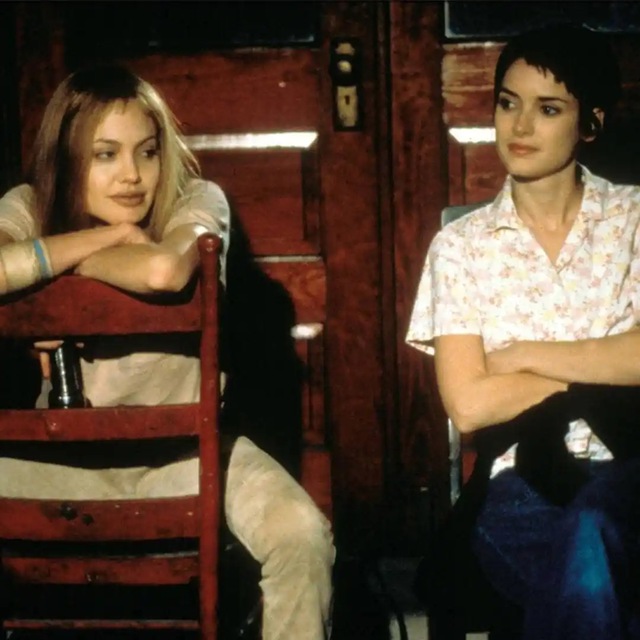
Susanna Kaysen, as portrayed by Ryder, was the audience’s surrogate into this hidden world. The film dismantled the “asylum” trope, replacing it with the chilling reality of Claymoore Hospital. It forced viewers to confront a reality where identity was something that could be diagnosed away, and where sanity was often measured by one’s willingness to conform to a suffocating social order.
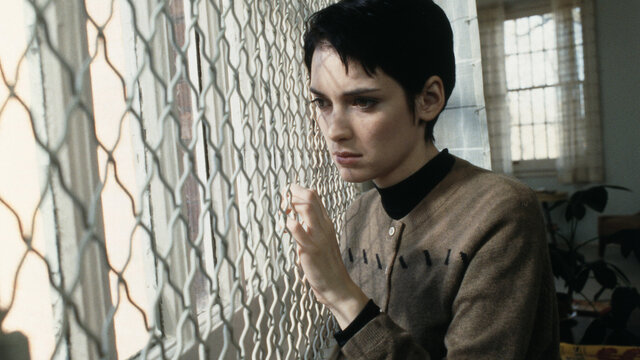
The Breaking Point: Experience the quiet, introspective tension of a woman questioning her own reality in this pivotal scene: Girl, Interrupted (1999) – Where’s Jamie?
Beyond the Scene-Stealing: The Weight of Subtle Performance
In the years since its release, much has been written about the high-intensity, scene-stealing performances that surrounded the central character. However, true cinematic weight often lies in restraint. Winona Ryder understood that if Susanna was too loud, the film would tip into melodrama. Instead, she chose the art of the whisper.
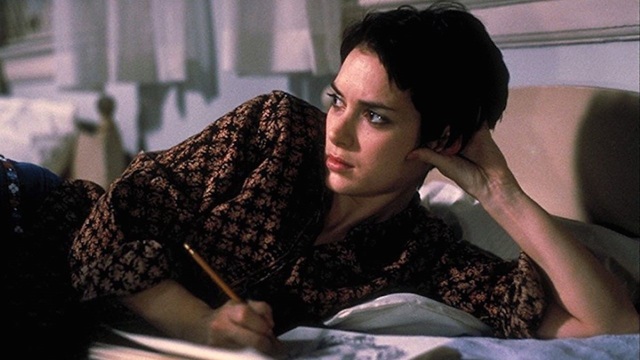
Ryder’s performance was defined by an eerie stillness. In a room full of shouting, her silence was the most poignant element. She didn’t rely on grand theatrical gestures to convey depression or anxiety; she used the flicker of an eye, the tightening of a jaw, and the way her voice seemed to catch in her throat. While others occupied the “highs” of the film, Ryder mastered the “lows,” ensuring that the audience never lost sight of the human being beneath the chaos.
Deciphering the Diagnosis: A Human Approach to Borderline Personality Disorder
One of the greatest triumphs of Ryder’s work was her refusal to treat Susanna’s diagnosis—Borderline Personality Disorder—as a gimmick. She didn’t want the character to be a “case study”; she wanted her to be a person. To achieve this, she worked closely with the emotional texture of the role, finding the “lived-in” nuances that made Susanna feel startlingly real.

By rejecting the labels that the doctors in the film were so quick to assign, Ryder highlighted the systemic failure of psychiatric institutions of that era. She portrayed Susanna not as a victim of her mind, but as a young woman caught in a system that prioritized categorization over listening. This human approach allowed the audience to connect with her on a level that felt profound and deeply personal.
The Director’s Heart: Winona Ryder as the Film’s Secret Shepherd
Many people view Girl, Interrupted simply as an acting gig for Ryder, but it was actually her passion project. She spent nearly a decade shepherding the film through development, having acquired the rights to the memoir years earlier. This wasn’t just another role; it was a story she felt the world needed to hear.
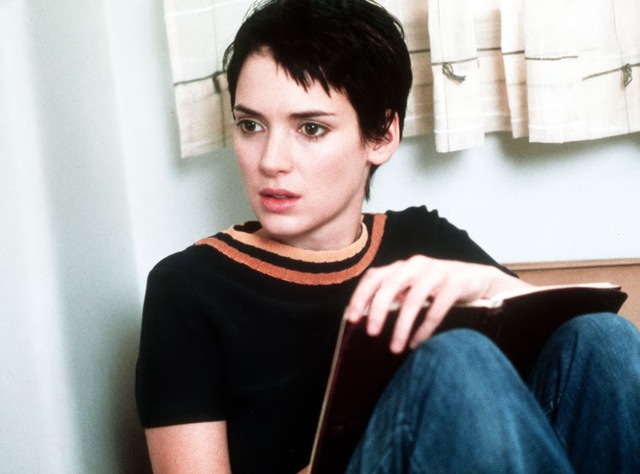
This film also marked a significant career transition for Ryder. Moving away from the “cool girl” or romantic lead roles of her earlier hits like Heathers and Edward Scissorhands, she embraced a mature, psychologically demanding gravity. Her commitment was evident in every frame. She wasn’t just acting; she was advocating for a story that gave voice to the voiceless.
The Emotional Anchor: Navigating a Galaxy of Intense Stars
The casting of Girl, Interrupted was legendary, featuring a galaxy of intense stars including Whoopi Goldberg, Vanessa Redgrave, and Elisabeth Moss. In such a powerhouse ensemble, a lesser actress might have been overshadowed. However, Ryder served as the film’s emotional anchor.
She possessed a unique ability to adapt her energy to whoever she was sharing the screen with, without ever losing the authenticity of Susanna. As both the narrator and the observer, she pulled the audience into the institution with her. We saw the other characters through her eyes, and her grounded presence kept the narrative from becoming a series of disconnected outbursts.

A Glimpse of Freedom: Watch the poignant contrast between institutional life and the outside world in the haunting: Girl, Interrupted (1999) – Downtown Scene (5/10).
Cult Status and Cultural Recognition: Connecting with the Invisible Struggle
While some awards seasons focused on the more “flashy” roles, the public’s connection to Ryder’s Susanna was immediate and lasting. Young women, in particular, saw their own quiet rebellions and invisible battles reflected in her performance. The film became a cult classic because it validated the feelings of loneliness and the search for meaning that so many face in silence.
Critics eventually caught up with the audience’s sentiment, acknowledging that Ryder provided the “soul of the film.” Her performance wasn’t designed to win trophies; it was designed to tell the truth. That honesty is what allowed the film to grow in stature over the decades, far outlasting the hype of its release year.

A Legacy Interrupted: The Enduring Impact Two Decades Later
More than twenty-five years after its debut, Girl, Interrupted remains more relevant than ever. In a modern world where conversations about trauma, institutional treatment, and mental health are finally becoming mainstream, the film serves as a historical benchmark.
Ryder’s Susanna Kaysen has become a patron saint for those navigating the complexities of their own minds. Her performance stands as one of the most accurate and empathetic depictions of mental health in cinematic history. It reminds us that recovery isn’t a straight line and that “sanity” is often a relative term.